Contact Us

SinglePoint US Bank Login: Spaced-Form Sign-in Guide

The SinglePoint US Bank Login is the spaced-form spelling variant of the same U.S. Bank commercial portal sign-in reached via the SinglePoint USBank Login concatenated form. This page walks through the SinglePoint US Bank Login procedure in five steps, explains why both spacings exist in search results and covers troubleshooting for common SinglePoint US Bank Login scenarios.

No SinglePoint US Bank Login form appears on this page. The authoritative SinglePoint US Bank Login page is reached via the header, mobile navigation or footer and requires Company ID, User ID, password and one-time passcode.

Go to SinglePoint US Bank Login Concatenated-form Login
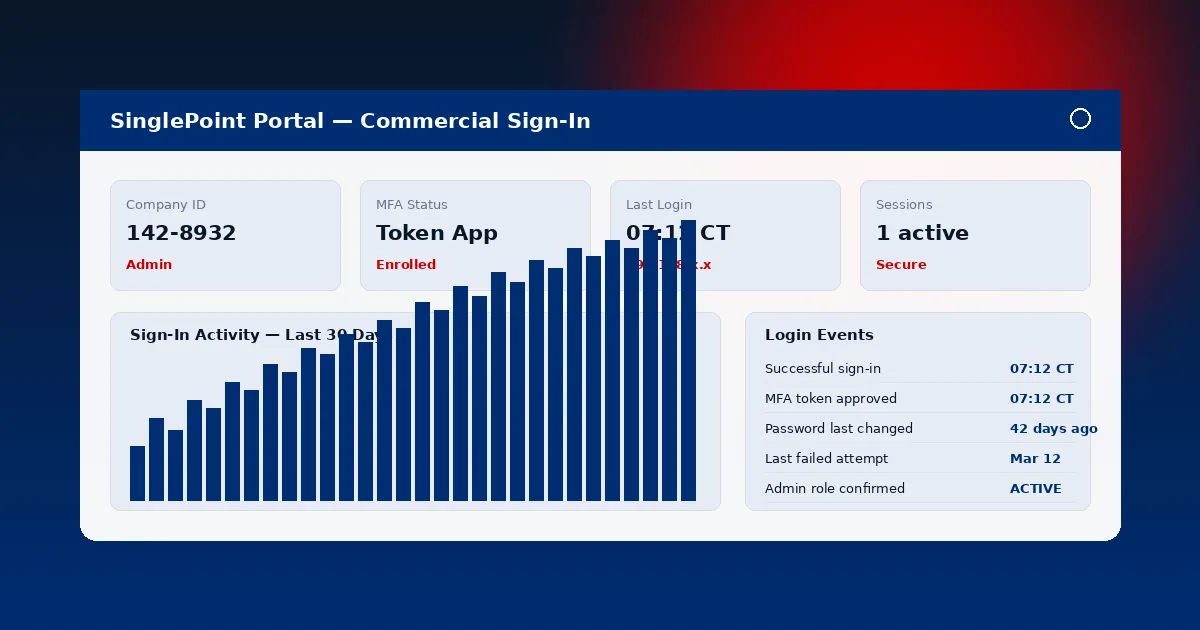
SinglePoint US Bank Login spaced-form sign-in walkthrough graphic with five steps

Why Both SinglePoint US Bank Login Spellings Exist

The SinglePoint US Bank Login (spaced) and SinglePoint USBank Login (concatenated) are spelling variants for the same sign-in flow. The SinglePoint US Bank Login spelling appears in printed materials, press releases and human-written documentation. The concatenated form lives in URLs and system strings.

Portal Mechanics

  • SinglePoint US Bank Login — spaced-form spelling used in print and documentation.
  • Same Destination — SinglePoint US Bank Login routes to the same sign-in as SinglePoint USBank Login.
  • Same Credentials — Company ID, User ID, password and token are shared across SinglePoint US Bank Login spellings.
  • Same Audit Trail — SinglePoint US Bank Login events log into one audit record regardless of spelling used to navigate.
  • Same Browser Support — current and current-minus-one Chrome, Edge, Safari, Firefox.

Five-Step SinglePoint US Bank Login Procedure

The SinglePoint US Bank Login procedure is identical to the concatenated form. The only difference is the spelling used to navigate to the sign-in page.

  1. Navigate to SinglePoint US Bank Login. Open singlepointportal.at and select the SinglePoint US Bank Login link in the header navigation. The SinglePoint US Bank Login landing page renders with fields for Company ID and User ID.
  2. Enter Company ID and User ID. Type your Company ID from the welcome kit followed by your User ID. Avoid browser autofill for the SinglePoint US Bank Login fields; autofill has been shown to mis-populate Company ID slots in some browsers.
  3. Enter Password. Enter your case-sensitive SinglePoint US Bank Login password. Passwords must include uppercase, lowercase, numeric and special characters, 12-32 total length. Five failed SinglePoint US Bank Login attempts lock the account.
  4. Complete One-Time Passcode. Approve the push notification in the U.S. Bank Token app or enter the six-digit hardware-token code within the 30-second SinglePoint US Bank Login OTP window. Expired codes return E-301.
  5. Land on Dashboard. On successful SinglePoint US Bank Login, the Account Summary dashboard loads with real-time balances, pending approvals, alerts and active session timer. Idle SinglePoint US Bank Login sessions expire after 15 minutes.

SinglePoint US Bank Login Troubleshooting

Six common SinglePoint US Bank Login scenarios with the expected result and the troubleshooting action to take.

StepActionExpected ResultTroubleshooting
1. NavigateOpen singlepointportal.atLanding page rendersClear cache, disable VPN, check DNS
2. Company IDType Company IDField acceptedRemove spaces; check welcome kit for exact value
3. PasswordType passwordPassword masked, Enter submitsConfirm caps lock; check keyboard layout
4. OTPApprove push or type codeRedirect to dashboardResync token; re-request OTP within 30s
5. DashboardSee Account SummaryBalances loadRefresh; check role scope with Administrator
Lockout5 failed attemptsAccount locksCompany Administrator unlock or 1-800-377-3404

SinglePoint US Bank Login at a Glance

Same sign-in flow as SinglePoint USBank Login, spelled with spaces.

5Steps
4Supported Browsers
30 secOTP Window
15 minIdle Timeout

SinglePoint US Bank Login Across Channels

SinglePoint US Bank Login on Web

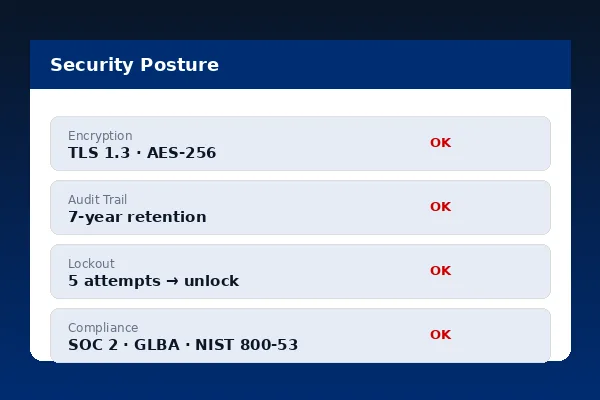
The web SinglePoint US Bank Login is the canonical entry point for desktop workstations and laptops. The SinglePoint US Bank Login landing page is served from singlepointportal.at with TLS 1.3 encryption and strict Content Security Policy. Credential harvesting extensions are blocked by the Content Security Policy so the SinglePoint US Bank Login flow resists form-grabber malware.
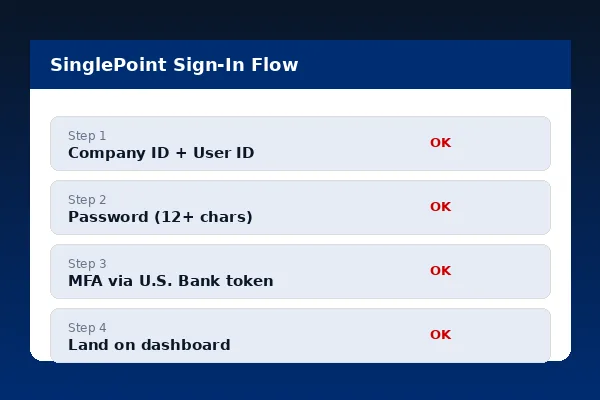
SinglePoint US Bank Login on desktop browser with Company ID and User ID fields
SinglePoint US Bank Login on iOS and Android mobile with biometric unlock

SinglePoint US Bank Login on Mobile

The mobile SinglePoint US Bank Login is the SinglePoint Mobile Banking app for iOS 16+ and Android 13+. The mobile SinglePoint US Bank Login adds biometric unlock (Face ID, Touch ID, Android BiometricPrompt) on top of Company ID, User ID, password and OTP. Every mobile SinglePoint US Bank Login event is audit-logged alongside web events.

Per Federal Reserve guidance, authentication layering for commercial banking is expected across every channel — SinglePoint US Bank Login applies the same controls on mobile as on web.

People Also Ask About SinglePoint US Bank Login

Is SinglePoint US Bank Login the same as SinglePoint USBank Login?
Yes. Two spellings, same sign-in flow. Both route to the same commercial banking portal with the same credentials and token.
Why does search return both SinglePoint US Bank Login and SinglePoint USBank Login?
Both spellings are indexed independently. SinglePoint US Bank Login is more common in printed materials; SinglePoint USBank Login in URLs and technical assets.
What if I forgot my SinglePoint US Bank Login password?
Use the password reset link or contact your Company Administrator. For emergencies, 1-800-377-3404 issues a 24-hour temporary SinglePoint US Bank Login password after verification.
Does the SinglePoint US Bank Login work outside the United States?
Yes, where U.S. sanctions laws permit. Disable VPN to avoid E-604 rejection. International support: +1-503-401-9991.
How is the SinglePoint US Bank Login audit logged?
Every attempt — successful or failed — is logged with user, timestamp, IP, device fingerprint and outcome, retained 7 years in alignment with OCC record-keeping expectations.

Commercial Banking Portal — Topic Cluster